
English
Views: 0 Author: Site Editor Publish Time: 2026-08-21 Origin: Site
Commercial facility maintenance costs are escalating rapidly every single year. Manual and walk-behind cleaning methods simply cannot keep pace in expansive modern spaces. They consume excessive time and severely strain your operational budget. You need a strategic shift in labor allocation and daily efficiency. Relying on outdated manual tools leaves large zones noticeably dirty. It also leaves your dedicated workers physically fatigued. Adopting a mechanized solution effectively transforms your entire maintenance routine. We provide a practical, vendor-neutral framework for procurement managers. Facility directors will also find this comprehensive guide highly useful. You will learn how to closely evaluate, shortlist, and deploy the right equipment. Our main objective is to help you select the ideal machine. You can successfully avoid over-purchasing or under-speccing your next valuable asset. This ensures your cleaning operations remain highly productive and sustainable.
Operational Thresholds: Upgrading to a ride on floor sweeper becomes cost-justified typically when cleaning zones exceed 50,000 square feet, significantly reducing labor hours.
Core Evaluation Metrics: Purchasing decisions should index heavily on dust control compliance (filtration), hopper dump mechanisms, and battery/fuel runtime over raw top speed.
Hidden Costs: Long-term value relies on assessing parts wear (brushes, skirts), battery life cycles, and local service availability, not just the initial capital expenditure.
Implementation Success: Seamless adoption requires mapping facility constraints (aisles, ramps) and establishing rigid operator maintenance routines prior to purchase.
Establish baseline metrics before making any purchasing decisions. Transitioning from walk-behind to ride-on models increases your square-foot-per-hour coverage rate exponentially. This directly translates to massive labor savings over time. A worker pushing a manual sweeper covers minimal ground during a shift. Conversely, a Ride On Floor Sweeper cleans massive areas in a fraction of the time. You can efficiently redirect saved labor hours to other critical facility tasks. Time saved equals money earned in commercial logistics.
Address the physical toll of routine commercial cleaning. Manual sweeping causes severe operator fatigue and body strain. Ride-on models drastically reduce this physical burden immediately. Operators sit comfortably during their entire scheduled shifts. This comfort leads to more consistent cleaning quality at the end of the day. You also face much lower injury-related workplace liabilities. Healthy workers remain more productive and take fewer sick days.
Discuss the pure business value of predictable hygiene standards. Mechanized debris removal ensures strict regulatory compliance across industries. Food and beverage processing plants require exact cleanliness standards to pass audits. Heavy manufacturing facilities demand clear walkways to maintain worker safety. A mechanized sweeper standardizes your daily hygiene routines perfectly. You eliminate the highly variable quality of human manual labor. Consistent cleaning creates a safer, more professional working environment.
Equipment Type | Average Coverage (Sq. Ft. / Hr) | Operator Fatigue Level | Ideal Facility Size |
|---|---|---|---|
Manual Push Broom | 2,000 - 3,000 | Extremely High | Under 5,000 Sq. Ft. |
Walk-Behind Sweeper | 15,000 - 25,000 | Moderate | 5,000 - 40,000 Sq. Ft. |
Ride-On Sweeper | 40,000 - 80,000+ | Very Low | Over 50,000 Sq. Ft. |
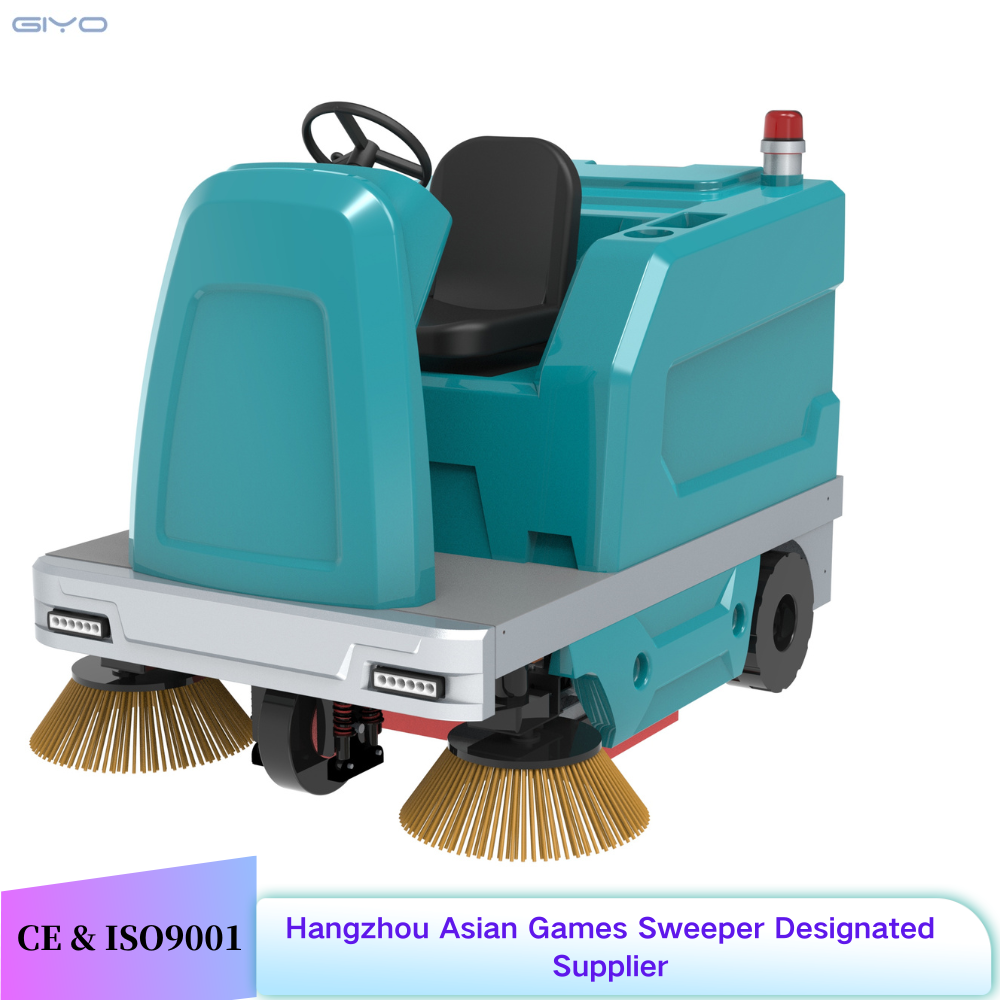
Consider battery power as the default for most indoor operations. Warehouses and retail spaces benefit greatly from electric models. Lead-acid and lithium-ion batteries offer distinct operational advantages. They provide highly valued zero-emissions operation indoors. They also feature much lower noise profiles during active use. You must balance these benefits against necessary charging downtime. Your facility needs a safely ventilated, dedicated charging station.
Internal combustion options include LPG, gas, and diesel engines. These suit heavy industrial and outdoor environments perfectly. Multi-shift operations often rely heavily on internal combustion power. Charging pauses are unfeasible during rapid operational shift changes. You can refuel an IC machine in mere minutes. They tackle steep ramps and rough outdoor terrain effortlessly. Choose IC models when non-stop runtime dictates your success.
Main cylindrical brushes dictate your core sweeping capability completely. Dual side brooms effectively expand the actual sweep path. The side brooms pull scattered debris away from walls and edges. The main brush then forcefully sweeps it into the collection hopper. You must match the brush material to your specific floor type.
Stiff Polypropylene Bristles: Handle rough concrete and asphalt effectively.
Nylon Bristles: Offer excellent longevity on smooth indoor surfaces.
Natural Fiber Bristles: Protect highly polished or painted floors from scratches.
Wire-Reinforced Brushes: Attack severely compacted dirt in heavy manufacturing zones.
Compare manual low-dump versus hydraulic high-dump systems carefully. Manual hoppers require significant physical lifting by your staff. Operators must drag heavy debris bins into standard dumpsters. Hydraulic high-dump systems eliminate this dangerous physical strain completely. We frame high-dump features as a vital safety necessity. Heavy-debris environments absolutely require them to protect workers. You avoid manual lifting injuries entirely. Efficiency increases when operators dump waste directly into large bins.
Filtration and dust control ensure strict OSHA compliance daily. Multi-stage filtration systems are completely necessary for indoor use. They use panel or pleated filters alongside automated mechanical shakers. These filters prevent fugitive dust from resettling on your clean inventory. They also strongly protect overall worker respiratory health. A high-quality Ride On Floor Sweeper captures fine particles safely. You must inspect the stated filtration specifications closely before buying.
Durability and build quality matter immensely in industrial settings. Emphasize the vital importance of robust steel frames. Look for impact-absorbing rollers located on the machine exterior. Corrosion-resistant components survive high-impact industrial environments better. Aesthetic plastics crack easily under harsh warehouse conditions. Industrial environments demand tough, heavy-duty construction at all times. Protect your investment by choosing highly durable structural materials.
Evaluate the learning curve for newly hired operators. Using the machine should feel "like driving" a simple golf cart. Look for highly intuitive, clearly labeled control panels. Clear sightlines help operators avoid sudden obstacles easily. One-touch sweeping mechanisms simplify the entire cleaning process. These smart features minimize operator training time significantly. They also heavily reduce costly user errors during shifts. Anyone on your warehouse team should feel comfortable operating it.
Advise buyers to measure their physical facility constraints carefully. Measure your narrowest aisles using a simple tape measure. Check your tightest turning radii at aisle intersections. Calculate your steepest ramp inclines accurately before proceeding. You must ensure the chosen machine can physically navigate the space. A bulky sweeper stuck in an aisle halts production completely. Map out these physical realities before purchasing anything.
Machines requiring complex tools for daily maintenance often fail. Operators will likely neglect difficult filter cleaning tasks over time. They will skip cumbersome brush swaps if tools are required. Highlight "tool-free access" as a strictly mandatory purchase specification. Operators must access key components quickly and safely. Daily maintenance should only take a few short minutes. Complex maintenance routines destroy long-term equipment value.
Outline the severe risk of premature battery degradation. Opportunity charging damages standard lead-acid batteries over time. You need strict, documented daily maintenance schedules in place. These protocols protect your significant financial investment. Train operators to check battery fluid levels regularly. Mandate a full uninterrupted charging cycle after every shift ends. Good charging habits extend the life of your batteries.
Argue firmly against buying blindly from a basic spec sheet. Demand a thorough facility walk-through from your chosen vendors. They must match machine capabilities to specific floor types. Debris profiles vary wildly between different industrial facilities. Fine dust requires different handling than broken wooden pallet shards. A mandatory site survey uncovers these hidden operational challenges. Expert vendors will spot potential issues you might easily miss.
Provide strict criteria for a highly successful live demonstration. Test the machine on your facility's worst-case-scenario debris. Do not just sweep a perfectly clean, open aisle. Throw actual production waste onto the warehouse floor. See how the machine handles bulky items and fine powders. Check if it leaves a dirty trail behind it. A real-world test proves the equipment's true worth immediately.
Stress the simple fact: a broken sweeper is totally useless. Evaluate vendors based on their service level agreements carefully. Check their local technician footprint in your specific region. Ask about guaranteed emergency response times for urgent repairs. Ensure necessary replacement parts are readily available nearby. Strong warranties protect your daily operations from unexpected downtime. A reliable service partner keeps your floors impeccably clean.
Purchasing a mechanized sweeper acts as a direct investment in facility productivity. It heavily protects long-term worker safety by reducing physical strain. Matching technical specifications precisely to physical realities remains highly critical for success. You must consider filtration, battery types, and dump mechanisms carefully. Do not underestimate the pure value of strong local dealer support.
We encourage decision-makers to audit current cleaning labor costs immediately. Calculate exactly how much manual sweeping costs your business monthly. Schedule a comprehensive site survey soon to explore your options. Partner exclusively with a certified, highly experienced equipment provider. You can make your cleaning operations significantly more efficient starting today.
A: A commercial ride-on sweeper typically lasts between 5 and 10 years under standard operating hours. This lifespan depends heavily on your adherence to daily maintenance routines. Harsher environments, like heavy manufacturing or foundry work, may shorten this duration. Proper battery care and regular brush replacements extend the machine's usable life significantly.
A: Sweepers handle dry, loose debris like dust, wood chips, and gravel. They use rotating brushes and vacuums to collect dirt into a hopper. Scrubbers use water and chemical solutions to remove stuck-on grime, grease, and stains from floors. If you face both issues, sweeper-scrubber combo units exist to perform both tasks simultaneously.
A: Yes, they often justify their higher upfront cost. Lithium-ion batteries require zero watering maintenance. They possess a much longer life cycle than lead-acid alternatives. Crucially, they allow for opportunity charging. You can plug them in during short breaks without damaging the battery cells, which boosts multi-shift productivity.
A: Yes, they easily transition across different surfaces. However, you must utilize adjustable brush pressure settings. Transitioning from smooth indoor concrete to rough outdoor asphalt requires a pressure adjustment. You may also need to change the bristle material to avoid scratching delicate floors or wearing out soft brushes on rough concrete.
