
English
Views: 0 Author: Site Editor Publish Time: 2026-08-21 Origin: Site
A commercial floor cleaning scrubber requires a significant capital expenditure. The decision to purchase, lease, or upgrade must be grounded in operational realities. Do not rely solely on product spec sheets. Choosing the wrong equipment size limits productivity. Poor operational habits often lead to premature motor failure and damaged flooring.
This guide details the critical evaluation criteria, operational safeguards, and maintenance frameworks. You will learn how to successfully deploy and manage mechanized floor cleaning assets. We provide actionable steps to protect your equipment. Evaluating your facility needs accurately ensures optimal sanitation. Standardizing your daily maintenance routines will extend machine lifespans significantly.
Match Size to Layout, Not Just Square Footage: A machine’s cleaning path must align with your facility's narrowest bottlenecks (aisles, doorways) rather than just total open area.
Standardize Operational Habits: The majority of equipment failures stem from improper chemical dilution and neglecting post-use recovery tank maintenance.
Align Pads/Brushes with Surface Types: Using the wrong abrasive on specialty surfaces (like resinous coatings or polished concrete) voids warranties and requires costly remediation.
Evaluating the business case for mechanized cleaning requires a hard look at current labor allocations. Manual mopping becomes financially unviable past a certain facility size. Labor costs dominate facility management budgets. Suboptimal sanitation standards also pose a constant risk. A mop simply pushes dirty water across the floor. Mechanized solutions dispense clean solution, scrub the surface, and immediately extract the waste. This continuous extraction process guarantees superior hygiene.
Labor reallocation metrics provide a clear picture of efficiency gains. A reliable Floor Cleaning Scrubber compresses an eight-hour manual cleaning task into a 1.5-hour mechanized process. Facility managers can then deploy staff to higher-value tasks. Employees can focus on sanitizing high-touch surfaces, restocking restrooms, or handling detailed maintenance. You stop paying premium hourly rates for inefficient bucket-and-mop routines.
Environmental and safety compliance represents another critical driver. Slip-and-fall incidents cost businesses millions annually. Mechanized scrubbers mitigate this risk effectively. They leave floors immediately dry. Powerful vacuum shoes extract water seconds after the scrub brushes pass. High-traffic environments benefit immensely from this rapid drying time. You eliminate the need for restrictive wet floor signs. Operations can continue safely without costly interruptions.
Choosing the correct equipment format dictates your daily operational success. You must evaluate physical constraints before looking at raw cleaning power.
Walk-behind floor cleaning scrubbers serve specific operational niches perfectly. They excel in facilities under 50,000 square feet. Congested areas, narrow retail aisles, and tight manufacturing layouts require their maneuverability. Multi-level buildings often rely on them due to elevator weight restrictions. Implementation brings a lower initial cost. However, you must manage operator fatigue. Pushing a heavy machine for several hours requires physical stamina. Staff rotation may become necessary during long shifts.
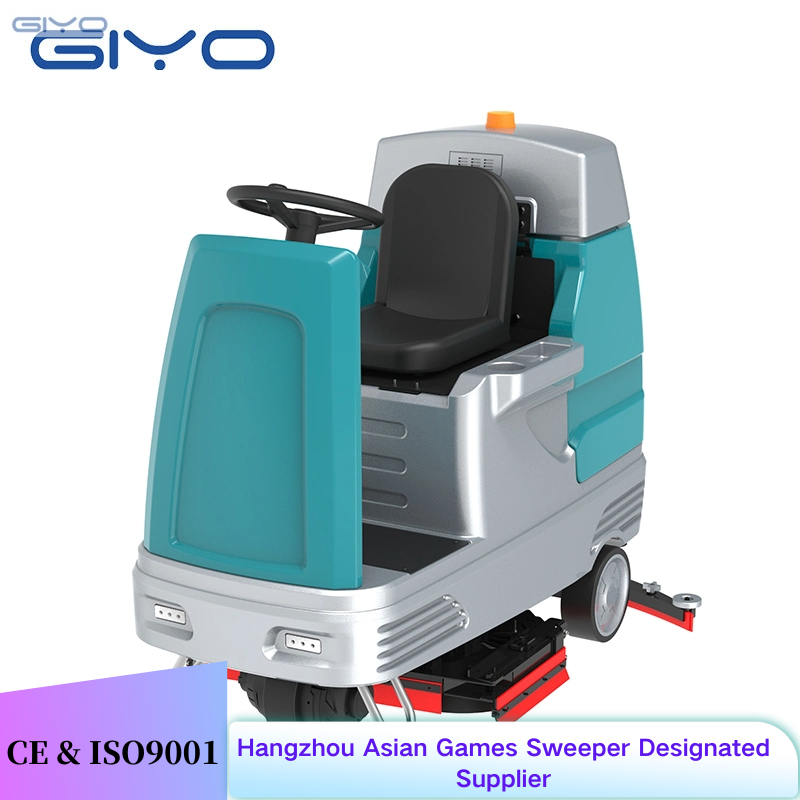
Ride-on floor cleaning scrubbers dominate large-scale environments. They handle wide-open spaces effortlessly. Warehouses, large retail supercenters, and hangars exceeding 50,000 square feet demand these machines. They offer significantly higher productivity rates. Tank capacities are much larger, reducing dump-and-refill trips. The implementation reality introduces unique challenges. They require larger turning radiuses. Operators need specialized training to navigate around racking and pedestrians safely. Battery replacement costs also scale up with these larger units.
Power source variables dictate your charging infrastructure. You typically choose between two main battery chemistries:
Lithium-ion batteries: These carry a higher upfront cost. They require zero watering maintenance. You can opportunity-charge them during short breaks without causing damage.
Lead-Acid batteries: These offer a lower initial purchase price. They demand strict watering schedules. Operators must ensure full charging cycles to maintain battery health.
Table: Equipment Category Comparison Matrix
Feature | Walk-Behind Scrubbers | Ride-On Scrubbers |
|---|---|---|
Ideal Facility Size | Under 50,000 square feet | Over 50,000 square feet |
Maneuverability | High (tight aisles, doorways) | Moderate (requires wide turns) |
Operator Fatigue | Moderate to High | Low |
Elevator Compliance | Usually compliant (lighter) | Often restricted (heavy) |
Improper operation destroys expensive equipment rapidly. Staff must understand the mechanical realities of the machines they operate. Establish strict guidelines to protect your investment.
First, examine the essential "Dos" of mechanized floor care. You must pre-sweep the area before scrubbing. Emphasize to your team that most floor cleaning scrubbers are not sweepers. Pulling solid debris into the squeegee vacuum ruins suction. Pallet splinters, zip ties, and heavy gravel will jam the extraction hoses. This debris eventually damages the vacuum motor. Always use neutral, low-foaming chemicals. High-foaming detergents create bubbles inside the recovery tank. This foam easily bypasses the float shut-off switch. Once foam enters the vacuum motor, catastrophic electrical failure follows. You must also match the pad or brush to the floor chemistry. Use soft nylon brushes for delicate or resinous floors. Reserve heavier grit brushes strictly for unfinished concrete. The wrong abrasive will strip protective coatings permanently.
Next, enforce the strict "Don'ts" of daily operation. Never leave the machine resting on its brushes when parked. The immense weight of the machine causes flat spots on the bristles. These flat spots lead to uneven cleaning paths. They also cause severe machine vibration during future use. Do not over-dilute cleaning solutions. More chemical does not equal cleaner floors. Excess chemical leaves a sticky residue. This residue actually attracts dirt faster, ruining the floor's appearance. Finally, do not opportunity-charge lead-acid batteries. Plugging in traditional batteries for short ten-minute bursts degrades their overall lifespan. Always let them charge completely.
Chart: Operational Safeguards Summary
Action Required | Reasoning / Impact |
|---|---|
Pre-sweep floors | Prevents debris from clogging hoses and burning out vacuum motors. |
Use low-foaming chemicals | Stops foam from bypassing the shut-off switch and flooding electronics. |
Avoid resting on brushes | Prevents permanent bristle deformation and intense machine vibration. |
Follow dilution ratios | Prevents sticky chemical buildup which actively attracts new dirt. |
Equipment longevity relies entirely on consistent maintenance. Haphazard cleaning routines guarantee expensive service calls. Implement a rigid Standard Operating Procedure (SOP) across your facility. Break this SOP down into three distinct chronological stages.
The Inspection Stage happens before the machine ever moves. Operators must execute these steps daily.
Check battery charge levels: Ensure the machine holds a full charge. This prevents mid-shift stranding in inconvenient locations like narrow aisles.
Inspect the squeegee blade: Look for micro-tears or trapped debris. A damaged squeegee blade leaves dangerous water streaks behind the machine.
Examine the inline filter: Ensure the clean water (solution) tank inline filter remains clear. A clogged filter starves the brushes of water.
The Operational Stage requires active situational awareness. Operators cannot simply push a button and zone out.
Monitor the recovery tank fill line: Rely on internal sensors, but always visually verify the water level. Visually checking prevents disastrous tank overflows.
Listen to the vacuum motor: Pay attention to changes in vacuum pitch. A high-pitched whine usually indicates a clog in the hose or a completely full tank.
The Preservation Stage is the most critical phase. It happens after every single use.
Empty and aggressively rinse the recovery tank: Failure to rinse the dirty water tank leads to severe consequences. Thick biofilm buildup will occur. This creates terrible odors and accelerates sensor corrosion.
Leave tank lids open: Prop the lids open overnight. Air circulation allows the tanks to dry, stopping mold growth instantly.
Remove and hang assemblies: Detach the squeegee assemblies and brush decks. Rinse them thoroughly. Hang them up to dry so they retain their proper shape.
Evaluating a Floor Cleaning Scrubber requires looking beyond basic price tags. You must assess how the machine's specifications translate to real-world performance. Begin by analyzing the ratio between the cleaning path and water capacity. A wide brush deck seems efficient initially. However, if paired with a small solution tank, it becomes a liability. The machine will run out of water rapidly. Operators will waste hours executing frequent dump-and-refill trips. You need a balanced ratio to ensure continuous, uninterrupted cleaning blocks.
Down pressure adjustability represents another crucial evaluation dimension. Facilities rarely feature just one flooring type. You might transition from polished concrete in a lobby to unfinished concrete in a warehouse. Dynamic down pressure allows operators to adjust brush force instantly. Heavy pressure removes stubborn grease. Light pressure protects delicate resinous coatings. Machines lacking this feature lack necessary versatility.
Never ignore after-sales support and parts availability. A localized service network is mandatory. Downtime waiting for proprietary parts often negates the savings of buying a cheaper, off-brand unit. If your machine breaks down, you need a technician on-site quickly. Assess the dealer's average response time. Ask about their inventory levels for common wear items like squeegees and vacuum motors.
Finally, always demand a proof of concept. Urge buyers to require an on-site demonstration. Do not test the machine on a clean, empty aisle. Test it on your worst-condition floor during operating hours. Validate vendor claims regarding maneuverability and water extraction before signing a purchase order. Real-world testing reveals flaws that specification sheets hide.
Deploying mechanized floor cleaning equipment transforms facility hygiene and labor efficiency. However, successful deployment requires careful planning. You must match the machine specifications to your exact facility layout. Avoid buying oversized units for congested spaces. Commit firmly to daily maintenance SOPs. Proper training prevents operators from inadvertently destroying expensive vacuum motors or batteries.
Take immediate action to evaluate your current setup. Audit your current square footage accurately. Identify all varied flooring types across your building. Understand where your narrowest bottlenecks exist. Once you compile this data, contact a certified equipment dealer. Request a comprehensive site assessment. Insist on seeing the equipment perform on your toughest floors. Proactive evaluation guarantees you select the perfect mechanized asset for your facility.
A: Battery lifespan depends on chemistry and maintenance. Cycle life for well-maintained lead-acid batteries usually ranges from 3 to 5 years. Lithium-ion batteries can last 7 or more years. Regarding daily runtime, expect 2.5 to 4 hours per charge. This runtime fluctuates based on brush down pressure and traction requirements.
A: No. Standard chemicals often foam excessively, which ruins vacuum motors. Harsh chemicals like bleach also degrade the internal polyurethane hoses and rubber gaskets rapidly. Always use approved, neutral, low-foaming commercial scrubber detergents designed specifically for mechanized equipment.
A: While specific variables exist, facilities cleaning more than 15,000 square feet daily experience rapid returns. You often see a full return on your initial investment through direct labor savings within 8 to 14 months.
A: Squeegees require regular attention. You should flip or rotate them at the first sign of water streaking. This often happens weekly or monthly depending on usage. Brushes typically last between 100 and 200 operational hours. Abrasive floors will wear bristles down much faster than smooth, polished surfaces.
