
English
Views: 0 Author: Site Editor Publish Time: 2026-09-02 Origin: Site
Grout lines quickly degrade the appearance of otherwise immaculate commercial facilities. They sit below the surrounding tile surface and feature a highly porous texture. This physical structure turns grout into a literal trough. Dirt, cooking grease, and dirty mop water naturally flow into these crevices and become trapped. Manual scrubbing proves incredibly labor-intensive and fails to scale across large floor plans. Meanwhile, standard floor machines frequently glide right over recessed grout lines without cleaning them. Facility managers often find this reality frustrating.
You can achieve pristine results by upgrading your equipment strategy. A Grout Cleaner Floor Scrubber is highly effective when configured properly. You must select the correct brush mechanics, optimize suction power, and apply the appropriate chemical agents. This guide provides a clear decision-stage framework. You will learn how to evaluate your facility's tile floors for successful machine cleaning. We will also explain how to specify the exact equipment features needed to avoid a wasted investment.
Standard disc floor scrubbers are inefficient for grout; cylindrical brush scrubbers are required to reach recessed lines.
Successful machine cleaning requires the "double-scrub" technique to allow chemical dwell time.
The effectiveness of a grout cleaner floor scrubber depends heavily on grout depth, machine down-pressure, and squeegee recovery capabilities.
Unsealed grout requires specialized, low-foaming alkaline solutions to lift deeply embedded contaminants before machine extraction.
Facility operators often wonder why their expensive cleaning equipment leaves tile floors looking dingy. The root cause usually traces back to improper brush mechanics. You cannot clean recessed areas using tools designed for smooth, flat surfaces. Understanding the physics of machine scrubbing helps you avoid common equipment mismatches.
The Gliding Effect: Disc brushes use flat rotary pads or bristles. Manufacturers design them specifically for flat surfaces like polished concrete or vinyl composition tile. These large circular pads bridge directly across the high points of the tile surface. They hydroplane over the top, leaving the recessed grout lines completely untouched. You end up polishing the tile face while ignoring the dirtiest part of the floor.
The Slurry Trap: Machines must recover the dirty water they produce. If a unit lacks adequate vacuum lift, the squeegee pushes dirty cleaning solution directly into porous grout lines. Industry professionals call this mixture "slurry." When slurry settles into the crevices and dries, the grout acts like a sponge. This phenomenon often makes your grout look significantly dirtier after a cleaning session.
The Solution: Proper extraction requires a purpose-built mechanical approach. You must utilize cylindrical brushes to achieve success. These brushes sweep aggressively downward into narrow crevices. When paired with high water-lift vacuums, they pull contaminants out of the microscopic pores. This combination physically breaks the bond between grease and grout.
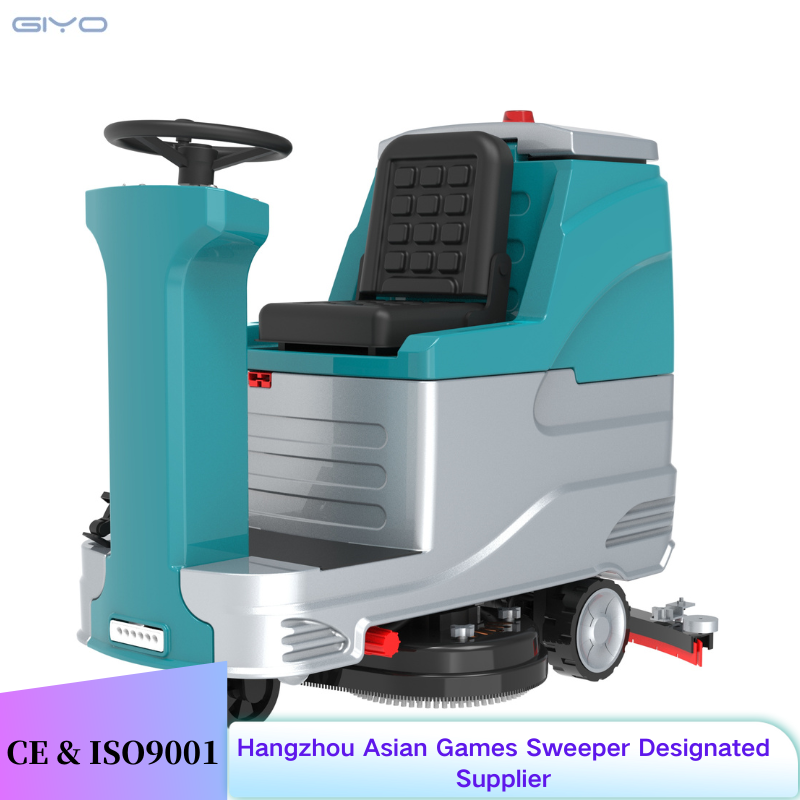
Procuring the right machine requires careful evaluation of your specific facility conditions. Not all scrubbers handle tile floors equally well. You must assess the following seven technical factors to ensure successful implementation.
Evaluation Check: Does the machine offer a cylindrical brush deck?
Why it matters: Cylindrical brushes spin at high RPMs on a horizontal axis. This specific orientation allows the bristles to sweep downward and flick dirt out of deep, narrow channels. Centrifugal force throws the suspended debris into a catch tray or vacuum path. Disc brushes simply smear soil around flat planes. Always insist on a cylindrical deck for heavily grouted areas.
Evaluation Check: Are your grout lines flush, shallow, or deeply recessed?
Why it matters: Deeply recessed or excessively wide grout lines demand specific bristle stiffness. Quarry tile in commercial kitchens represents a classic example. You may require stiffer bristle types like nylon or mild grit to agitate effectively. Softer bristles simply bend upon impact and fail to scrub. However, you must match the grit level carefully to avoid bristle fatigue and tile scratching.
Evaluation Check: Can the operator manually adjust the brush pressure?
Why it matters: Cleaning tough stains requires sufficient mechanical friction. Too little pressure fails to break the surface tension of hardened grease or biofilms. Conversely, applying too much pressure causes significant damage. Heavy down-pressure can chip delicate tile edges or degrade older, crumbling grout. Look for machines offering variable actuator settings so you can dial in the exact force required.
Evaluation Check: Can the machine handle heavy-duty, low-foaming grout cleaners?
Why it matters: Physical scrubbing alone rarely restores neglected floors. You need acidic chemicals to dissolve hard water minerals. You need heavily alkaline chemicals to break down protein and grease. The machine's solution tank, pumps, and hoses must be chemically resistant. Furthermore, the solution must remain strictly low-foaming. High suds easily bypass float shut-offs and destroy expensive vacuum motors.
Evaluation Check: Look at the water-lift specs and the squeegee blade material.
Why it matters: Vacuum performance dictates how much dirty slurry you actually remove. Water-lift specifications tell you the sheer pulling power of the motor. Squeegee material matters just as much. Kitchen floors often contain heavy animal fats and cooking oils. These environments quickly degrade standard rubber blades. Urethane blades resist oil breakdown and ensure a tight vacuum seal.
Squeegee Blade Material Comparison
Material Type | Best Suited For | Oil Resistance | Wear Life |
|---|---|---|---|
Gum Rubber / Linatex | Smooth, uneven surfaces; standard dirt | Low (Swells upon contact) | Average |
Standard Polyurethane | Rough surfaces, industrial concrete | High | Long |
Premium Urethane | Commercial kitchens, heavy grease environments | Excellent | Maximum |
Evaluation Check: Is the grout sealed or unsealed?
Why it matters: Unsealed grout behaves like a dry sponge. It absorbs dirty water instantly upon contact. Machines used on unsealed grout must possess superior vacuum suction to overcome this capillary action. Additionally, operators must factor in a post-cleaning sealing process. Applying a penetrating sealer after extraction prevents future soils from embedding deeply, thereby protecting your cleaning investment.
Evaluation Check: Where is the tile located?
Why it matters: Open lobbies allow large ride-on machines to operate freely. Cramped restrooms present entirely different challenges. Floor scrubbers physically cannot reach flush against baseboards or deep into 90-degree corners. Choosing an overly large machine forces your staff to perform significant manual edge-work. You should select a micro-scrubber or a compact orbital machine for tight spaces.
Buying the right equipment solves only half the problem. You must also implement correct operational procedures. Machine scrubbing is never a one-pass magic fix for severely neglected grout. It requires an operational shift in how your team approaches hard floors.
Redefining Success: Industry professionals rely on a specific procedure known as double-scrubbing. This method prioritizes chemical dwell time over speed. When you encounter heavily soiled tile, a single pass simply does not allow chemicals enough time to work.
Follow these steps to execute the double-scrub method effectively:
Chemical Application & Dwell Time: Lay down a generous amount of chemical solution using the scrubber. Keep the vacuum motor turned completely off. Leave the squeegee assembly raised off the floor. Allow the liquid to sit undisturbed for 5 to 10 minutes. This critical dwell time emulsifies hardened dirt and grease.
Agitation: Keep the squeegee raised and the vacuum off. Run the machine back over the soaked area. Allow the cylindrical brushes to aggressively scrub the grout lines. The bristles will loosen embedded soils and suspend them in the liquid.
Extraction: Lower the squeegee assembly to the floor. Turn the vacuum motor on. Make a final, slow pass over the agitated area. The powerful suction will lift the suspended slurry out of the grout pores, leaving the surface nearly dry.
Many organizations hesitate to invest capital into mechanized floor care. They view mop-and-bucket routines as cheaper alternatives. However, manual methods present hidden inefficiencies. Evaluating the return on investment requires looking at labor hours, cleaning consistency, and risk reduction.
Labor Cost Reduction: Manual deck brushing consumes massive amounts of time. A typical worker using a manual deck brush covers approximately 500 square feet per hour. They must also spend additional time mopping up the slurry. In contrast, a walk-behind scrubber easily cleans up to 15,000 square feet per hour. The labor savings generated by this speed difference justify the equipment purchase rapidly.
Consistency of Clean: Human workers experience inevitable physical fatigue. The quality of manual scrubbing drops drastically toward the end of a long shift. Machines do not get tired. They apply exact chemical dilutions and maintain consistent brush pressure across the entire facility. This uniformity eliminates uneven, patchy appearances on your tile floors.
Risk Mitigation: Traditional mop-and-bucket methods leave floors dangerously wet for extended periods. This moisture creates significant slip-and-fall hazards for employees and customers. Modern scrubbers extract almost all moisture instantly. They leave floors bone-dry and immediately safe for foot traffic. Reducing liability exposure represents a massive, often overlooked benefit.
Efficiency Chart: Manual vs. Machine Scrubbing
Metric | Manual Deck Brushing | Machine Scrubbing |
|---|---|---|
Coverage Rate (sq ft/hr) | ~500 - 800 | 10,000 - 15,000+ |
Water Recovery | Poor (Relies on mop absorption) | Excellent (Vacuum extraction) |
Drying Time | 30 - 60 minutes | Nearly immediate |
Worker Fatigue | High | Very Low |
Navigating the equipment market feels overwhelming given the numerous brands and specifications available. You can simplify this process by mapping your exact facility requirements directly to machine features. This approach ensures you only pay for necessary capabilities.
Feature-to-Outcome Mapping:
Requirement: Deep grout cleaning. Feature: Cylindrical brush deck.
Requirement: Heavy grease or commercial kitchen use. Feature: Urethane squeegee blades and high-alkaline chemical compatibility.
Requirement: Restrooms or tight spaces. Feature: Micro-walk-behind or upright scrubber configurations.
Requirement: Uneven tile surfaces. Feature: Articulating brush heads that contour to floor dips.
Next-Step Actions: Never purchase industrial cleaning equipment unseen. Always request an on-site demonstration from a reliable dealer. Ask the representative to demo the unit on your absolute dirtiest patch of grout. This real-world test proves the extraction capabilities of the vacuum and squeegee setup. If the machine leaves a dirty slurry behind during the demo, it will do the same during daily operations. A premium Grout Cleaner Floor Scrubber will restore the original grout color visibly upon the first pass.
A floor scrubber serves as a highly effective tool when viewed as part of a comprehensive system. You achieve success only by combining the machine with the correct brush type, the proper chemical solutions, and the disciplined double-scrub technique. Standard disc scrubbers simply cannot reach into recessed pores, making them a poor choice for heavily tiled areas.
We highly recommend avoiding standard disc scrubbers if tile maintenance represents your primary objective. Invest strategically in a cylindrical model instead. You should evaluate your floor plan carefully, map out your space constraints, and insist on a live demonstration. Following these steps guarantees genuine operational efficiency and consistently spotless floors.
A: Yes, damage can occur if you use excessive down-pressure or apply highly abrasive grit brushes to delicate grout. Leaving highly acidic chemicals to dwell too long also degrades the cementitious bonds. Proper setup, correct brush selection, and strict adherence to chemical dilution guidelines easily mitigate these risks.
A: You must strictly use a low-foaming commercial cleaner suited to your specific soil type. Use alkaline solutions for grease and proteins, or acidic solutions for hard water minerals. High-foaming household cleaners will quickly ruin the machine's vacuum motor and void your warranty.
A: For high-traffic commercial spaces like kitchens or public lobbies, daily or weekly machine cleaning works best. Frequent maintenance prevents the deep, hardened soil build-up that necessitates restorative, heavy-duty stripping procedures down the road.
