
English
Views: 0 Author: Site Editor Publish Time: 2026-09-02 Origin: Site
Purchasing commercial cleaning equipment constitutes a significant capital expenditure. This investment directly impacts daily operational efficiency and long-term labor costs. Facility managers must treat equipment selection as a highly strategic operational decision.
The current market overflows with generic cleaning machines. Selecting a robust Hand Push Floor Scrubber requires looking past basic top-line specifications. You must evaluate practical machine durability and daily operator adoption rates. These factors ultimately dictate the true value of your cleaning assets.
This guide breaks down the objective evaluation criteria for commercial scrubbers. We detail how GIYO’s engineering, manufacturing standards, and pragmatic design approach support high-ROI facility maintenance. Read on to discover actionable strategies for optimizing your cleaning programs.
Transitioning to a mechanized hand push floor scrubber can reduce floor cleaning labor hours by up to 60% compared to traditional manual methods.
Effective equipment evaluation must calculate practical productivity (square footage per hour) rather than theoretical maximums.
GIYO prioritizes robust, low-complexity engineering to minimize operator training friction and reduce long-term maintenance liabilities.
Factory-direct procurement from an established manufacturer ensures verified compliance, consistent quality control, and reliable parts availability.
Manual cleaning methods create immediate operational bottlenecks. A traditional mop and bucket system simply pushes dirty water around the facility. This approach leaves residual moisture on the floor. It drastically increases slip-and-fall liabilities. Furthermore, manual mopping scales poorly across commercial spaces. Once your facility exceeds 2,000 square feet, manual methods become financially unsustainable.
Facility managers must analyze the shift from high variable labor costs to a fixed equipment asset. Labor generally accounts for the largest portion of any cleaning budget. By mechanizing the process, you replace hundreds of expensive labor hours with a single upfront equipment investment. This cost-to-outcome shift fundamentally changes facility management economics.
You can easily calculate a realistic return on investment (ROI) timeline. First, determine the hourly wage of your cleaning staff. Next, calculate the weekly hours spent mopping. Compare this baseline against the time saved by utilizing a commercial-grade Hand Push Floor Scrubber. Most facilities reach their break-even point within just a few months of daily operation.
How do we define a successful equipment deployment? We look at specific, measurable outcomes. A highly effective deployment achieves the following success criteria:
Reduced Cleaning Times: Slashing floor maintenance schedules by half or more.
Improved Floor Hygiene: Demonstrating objectively cleaner floors. You can measure this using ATP (Adenosine Triphosphate) testing meters or stringent visual standards.
Zero Safety Incidents: Eliminating wet-floor slipping hazards entirely. The machine recovers water instantly, leaving surfaces dry and safe.
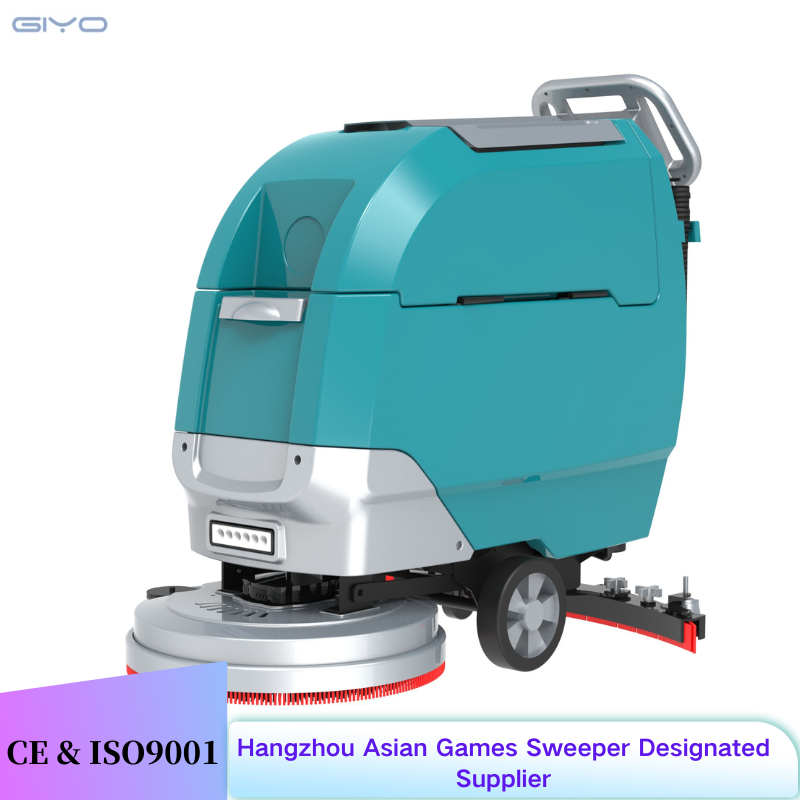
Understanding productivity metrics remains essential for proper equipment selection. Manufacturers often advertise a machine's theoretical maximum cleaning capacity. However, you must rely on practical productivity figures to make informed decisions.
The standard productivity formula multiplies the cleaning path width by the machine speed. It then factors in a realistic efficiency rating. Why do we need an efficiency rating? Real-world cleaning involves overlapping passes, turning corners, navigating around obstacles, and pausing to empty recovery tanks. Therefore, realistic operational efficiency typically falls between 65% and 75% of the theoretical maximum.
Metric Category | Theoretical Productivity | Practical Productivity |
|---|---|---|
Definition | Maximum area covered running straight continuously. | Actual area covered including turns and pauses. |
Efficiency Factor | 100% efficiency assumed. | Typically 65% to 75% efficiency. |
Operational Reality | Ignores obstacles, doorways, and tank refills. | Accounts for real-world facility navigation. |
Best Use Case | Marketing specification comparisons. | Accurate daily labor scheduling. |
Facility matching is the next critical evaluation step. Sizing the machine correctly prevents operational friction.
Small or Congested Areas: Narrow aisles, busy retail spaces, and tight corners demand maneuverability. Compact scrubbers excel here. They navigate around display racks and furniture easily. Over-sizing your equipment in these spaces leads to wall damage and frustrated operators.
Large Open Spaces: Gymnasiums, wide hallways, and warehouse floors require scale. You need to increase the tank capacity and brush width. Larger tanks minimize the frequency of dump-and-refill cycles. This keeps your staff actively cleaning rather than traveling back and forth to the janitor's closet.
Power systems also dictate productivity. You must evaluate the operational differences between various battery configurations. Lead-acid batteries offer a lower upfront cost. However, they require strict weekly maintenance and watering. Absorbed Glass Mat (AGM) batteries provide a maintenance-free alternative. They handle deep cycling well but cost slightly more. Lithium-ion configurations represent the premium tier. They offer extended runtimes, allow opportunity charging, and boast much longer replacement cycles. Evaluate your facility's charging infrastructure and staff reliability before selecting a battery type.
All mechanical equipment operating in harsh commercial environments faces significant wear and tear. GIYO approaches equipment manufacturing through a lens of pragmatic engineering. They deliberately avoid unnecessary electronic complexities. Complex touchscreens and delicate sensors often fail when exposed to water, chemicals, and daily impacts. Instead, GIYO focuses on robust mechanical reliability.
Wear-and-tear mitigation serves as a core design principle for GIYO machines. The engineering team reinforces specific components prone to damage. They utilize heavy-duty squeegee assemblies designed for high impact resistance. If an operator accidentally bumps a door frame, the squeegee assembly absorbs the shock without bending. This ensures consistent water suction across uneven floors.
The chassis and fluid tanks receive equal attention. GIYO utilizes corrosion-resistant tank materials. Harsh floor strippers and degreasers will not degrade the plastic over time. Furthermore, reinforced metal chassis frames prevent structural twisting. This rigidity keeps the scrub deck perfectly aligned for years.
GIYO also designs for immediate serviceability. They implement highly accessible brush and pad assist mechanisms. Operators can perform quick, tool-free replacements on the fly. Frontline workers do not need to hunt for wrenches or screwdrivers to change a worn-out pad.
We maintain transparent assumptions regarding equipment care. Every piece of mechanical equipment requires ongoing maintenance. A machine will break down if entirely neglected. GIYO’s distinct advantage lies in accessibility. They make preventive maintenance highly accessible to everyday frontline workers. You rarely need to call an expensive, specialized technician for routine upkeep.
Purchasing top-tier equipment means nothing if your staff refuses to use it. The usability factor directly influences ROI. Complex control panels intimidate workers. When a machine feels difficult to operate, cleaning staff will abandon it. They will revert to familiar, inefficient manual mopping.
GIYO directly combats this psychological friction. They engineer their control interfaces for absolute simplicity. The dashboard focuses on intuitive, push-button operations. One button activates the water flow, while another lowers the squeegee. We eliminate nested digital menus entirely. Additionally, ergonomic handle designs reduce operator fatigue. Staff can operate the machine for extended shifts without experiencing wrist or shoulder strain.
Training rollout processes become remarkably straightforward. Standardizing your deployment process takes minutes, not hours. GIYO equipment requires minimal onboarding. You simply show the operator the controls, demonstrate a tank refill, and let them walk. This simplicity proves invaluable for facilities dealing with high staff turnover. You can maintain consistent, high-level cleaning standards regardless of who clocks in for the shift.
Safety compliance remains non-negotiable in populated spaces. Commercial facilities must protect both patrons and employees. GIYO designs their machines to meet essential safety restrictions. They engineer vacuum motors for low decibel output. This noise reduction allows staff to clean during normal business hours without disturbing customers or office workers. Furthermore, reliable emergency shut-off requirements ensure complete operational safety. If an operator loses control, the machine stops instantly.
Selecting the right brand involves evaluating the company behind the machine. GIYO operates with a significant manufacturing pedigree. They hold status as an established OEM/ODM (Original Equipment Manufacturer / Original Design Manufacturer). Buyers must understand the critical difference between a dedicated manufacturer and a white-label reseller.
White-label resellers simply buy generic machines, slap a sticker on them, and mark up the price. They rarely control the engineering process. GIYO owns its production lines. They control every aspect of the build, from raw material sourcing to final assembly. This factory-direct authority guarantees superior product consistency.
Rigorous quality control standards dictate the factory floor environment. GIYO executes comprehensive testing protocols before any Hand Push Floor Scrubber enters a shipping crate. Technicians run motor stress tests to ensure thermal stability. They perform strict battery safety validations. They also conduct exhaustive leak testing on every solution and recovery tank. You receive a machine proven to perform under stress.
Finally, we must address after-sales and parts security. Equipment downtime destroys cleaning schedules. Partnering with a brand controlling its own supply chain provides a massive strategic advantage. GIYO guarantees the availability of consumable wear parts. You can quickly source replacement squeegee blades, scrub brushes, and vacuum hoses. Factory-direct support eliminates the agonizing six-week wait times often associated with third-party resellers. Your machines stay on the floor, doing the work you bought them to do.
Choosing the ideal commercial scrubber requires a balanced approach. You must weigh theoretical productivity metrics against practical operational realities. Pure speed matters less than everyday durability and ease of use. Mechanizing your cleaning process remains one of the fastest ways to optimize labor budgets and elevate facility hygiene.
When shortlisting options, logically match the specific GIYO model to your facility’s unique square footage. Also, account for the technical proficiency of your cleaning staff. Simpler environments demand compact, highly maneuverable machines. Massive spaces require wider cleaning paths and larger tank capacities.
Take actionable next steps today. Calculate your specific cleanable facility footprint. Determine your current weekly manual cleaning hours. Then, contact the GIYO technical team directly. They will provide a tailored machine recommendation and a detailed ROI assessment to guide your procurement strategy.
A: First, measure the narrowest aisle or doorway in your facility to determine your maximum cleaning path width. Next, calculate your total cleanable square footage. Match the machine's tank capacity to this area. Larger areas require bigger tanks to minimize time-wasting dump and refill cycles.
A: You can expect a lifespan of 5 to 7 years under heavy daily commercial use. However, this timeline relies entirely on your staff following standard daily maintenance protocols. Rinsing tanks, wiping squeegees, and charging batteries correctly will significantly extend the machine's operational life.
A: Replacement parts are highly accessible. GIYO operates as a factory-direct manufacturer, which secures their supply chain. They maintain robust inventories of high-wear items, including squeegee blades, vacuum filters, and brushes. This direct fulfillment model drastically reduces equipment downtime.
A: No, they do not require specialized high-voltage infrastructure. GIYO models easily plug into standard 110V or 220V wall outlets, depending on your region. Whether you choose AGM or Lithium-ion battery configurations, the provided onboard or external chargers utilize standard facility electrical grids.
