
English
Views: 0 Author: Site Editor Publish Time: 2026-09-07 Origin: Site
Keeping commercial floors clean is a relentless daily battle. Manual maintenance costs continue to escalate rapidly across industries. Labor shortages force facility managers to do more using fewer resources. Additionally, poor slip-and-fall prevention exposes businesses to severe compliance risks. You need a smarter, more efficient approach to facility upkeep.
Enter the mechanized cleaning solution. An automatic floor scrubber dispenses solution, actively scrubs, and recovers dirty water in one single pass. It transforms hours of grueling manual labor into minutes of mechanized work. This guide bypasses industry marketing fluff completely. We will objectively evaluate machine sizes, core features, and operational realities. You will understand exactly what it takes to deploy heavy-duty cleaning equipment successfully. Read on to master your floor maintenance strategy and protect your bottom line.
Automatic floor scrubbers reduce labor time by up to 60% compared to traditional mop-and-bucket methods, but ROI depends strictly on matching machine size to cleanable square footage.
Upgrading to an automatic ride on electric floor scrubber becomes operationally viable for open spaces exceeding 50,000 square feet.
Key evaluation metrics should extend beyond purchase price to include battery runtime, brush down-pressure, and long-term consumable costs (squeegees, pads, and motors).
Facility constraints—such as aisle widths, ramp inclines, and floor types—must dictate the final procurement decision over raw cleaning capacity.
Understanding the internal mechanics helps you utilize these machines effectively. Every automatic floor scrubber relies on a strict three-stage process. First, the machine dispenses a precise mixture of clean water and cleaning chemical onto the floor. Next, mechanical agitation takes over. Heavy cylindrical or rotary brushes spin rapidly against the surface to break down dirt and grease. Finally, the recovery system engages. A powerful vacuum pulls the dirty water through a rear squeegee blade and deposits it into a separate recovery tank.
Many people confuse scrubbers and floor buffers. We must clarify this common industry misconception. Floor buffers merely polish dry or damp floors using high-speed friction. They do not extract liquids. Conversely, scrubbers recover water immediately. This immediate extraction guarantees strict OSHA slip-hazard compliance by leaving floors instantly dry and safe for foot traffic.
We must also apply a skeptical lens to manufacturer claims. While these machines clean vast areas efficiently, they rarely eliminate all manual work. Standard disc scrubbers cannot reach deep into tight corners. They do not pick up large solid debris. Unless you utilize a specific cylindrical brush model, your cleaning staff must still sweep the floor beforehand and manually mop the edges.
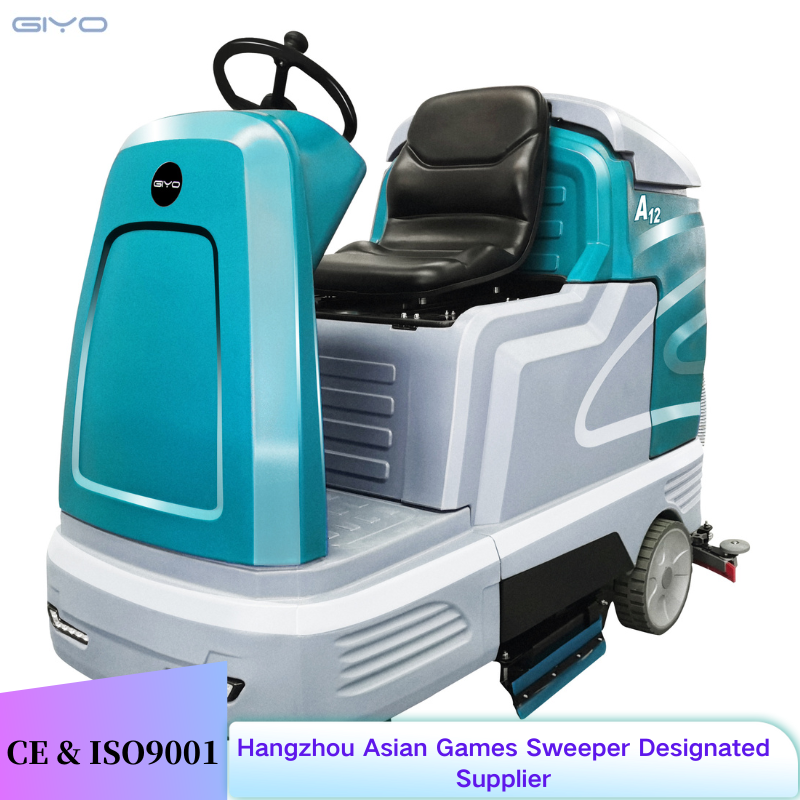
Buying the largest machine rarely guarantees the best results. You must match the cleaning path width to your specific facility layout. We can divide these machines into three distinct size categories.
Compact scrubbers replace standard mop buckets. They feature narrow cleaning paths ranging from 12 to 20 inches. These nimble units navigate tight spaces effortlessly. They represent the best choice for congested areas, narrow aisles, and retail convenience stores. We recommend compact models for facilities measuring under 20,000 square feet. They fit easily through standard commercial doorways and store neatly in small janitorial closets.
Mid-size machines offer a perfect balance of agility and productivity. They typically feature 20 to 28-inch cleaning paths. You will see these units operating in grocery stores, school hallways, and medium-sized warehouses. They clean spaces ranging from 20,000 to 50,000 square feet efficiently. A standard mid-size scrubber easily handles moderate foot traffic areas without requiring excessive refill trips.
Large facilities demand serious mechanical intervention. An Automatic Ride on Electric Floor Scrubber delivers massive productivity gains. These heavy-duty machines feature cleaning paths exceeding 26 inches, often reaching up to 40 inches or more. They are absolutely necessary for large logistics centers, airports, and sprawling manufacturing plants exceeding 50,000 square feet.
The labor economics heavily favor ride-on units in large spaces. Operators clean at much faster walking speeds without suffering physical fatigue. This increased speed dramatically offsets the higher upfront capital expenditure. Facilities typically realize localized labor savings over a standard two to three-year depreciation cycle.
However, you must check your facility constraints before purchasing. Ride-on units require much wider turning radiuses. They cannot navigate narrow store aisles. Furthermore, you must provide dedicated charging stations and ample storage bays for these massive machines.
Floor Scrubber Size and Application Breakdown
Machine Category | Cleaning Path | Ideal Facility Size | Primary Environments |
|---|---|---|---|
Micro/Compact Walk-Behind | 12" - 20" | Under 20,000 sq. ft. | Convenience stores, narrow aisles, clinics |
Mid-Size Walk-Behind | 20" - 28" | 20,000 - 50,000 sq. ft. | Grocery stores, schools, medium warehouses |
Ride-On Scrubber | 26" - 40"+ | 50,000+ sq. ft. | Airports, logistics centers, manufacturing |
Selecting the right size only solves half the puzzle. You must evaluate internal components and features to maximize long-term return on investment.
Electric scrubbers dominate the commercial market. You must choose the right battery chemistry for your operational habits.
Lead-Acid: These batteries cost the least upfront. However, they require strict weekly watering schedules. They also demand proper ventilation during charging.
AGM (Absorbent Glass Mat): These sealed batteries require no watering. They provide a safe middle-ground option for most mid-sized facilities.
Lithium-Ion: Lithium-ion batteries dominate modern cleaning fleets. They offer "opportunity charging," meaning you can plug them in during a 15-minute break without damaging the cells. They require zero maintenance. Despite a higher initial cost, they easily outlast traditional batteries.
The brush deck dictates how the machine interacts with floor dirt. Disc decks utilize flat, spinning pads. They work best for smooth floors like polished concrete or vinyl composition tile (VCT). They deliver a high-gloss shine.
Cylindrical decks operate entirely differently. They feature tube-shaped brushes spinning at high speeds. These brushes sweep small debris into a catch tray while simultaneously scrubbing the floor. We strongly recommend cylindrical decks for industrial and warehouse environments. They eliminate the tedious pre-sweeping step entirely.
Evaluate the solution and recovery tank sizes carefully. A larger tank simply means fewer dump-and-refill cycles. Fewer stops directly increase your operator's labor efficiency. Modern units often include eco-modes. These settings reduce water and chemical flow for daily light maintenance. Some premium scrubbers even feature chemical-free scrubbing technologies. They electrically convert tap water into a powerful cleaning agent, stripping chemical costs from your budget entirely.
Brush down-pressure determines cleaning aggression. Basic scrubbers rely on the physical weight of the deck. Advanced units feature variable down-pressure controls. You can apply 50 pounds of pressure for daily dust removal. Then, you can increase it to 150 pounds to strip heavy grease from a warehouse loading dock. Variable pressure remains critical for facilities managing diverse soil types.
Purchasing the machine is only step one. Implementing it into a daily janitorial routine exposes several hidden operational realities.
Advanced machines are often mishandled. The commercial cleaning industry suffers from notoriously high employee turnover. If a machine requires a complex sequence of buttons to operate, new staff will inevitably break it. You must prioritize intuitive controls. Look for simple dashboard layouts. Single-button start features mitigate expensive training costs and prevent operator errors.
You must acknowledge the transparent assumptions of ownership. An automatic scrubber is not a static asset. It consumes parts daily. You must routinely replace squeegee blades, vacuum hoses, and brush pads. Rubber squeegees wear down and lose their sharp edge. When you fail to replace them, the machine leaves water streaks behind. These streaks immediately recreate the very slip hazards you bought the machine to prevent.
Mechanical breakdowns will happen. We strongly advise securing local service technicians before finalizing a purchase. You cannot wait three weeks for a factory part while your warehouse floors accumulate grease. Furthermore, modern fleet management requires telemetry and IoT (Internet of Things) connectivity. These smart features track machine usage, monitor battery health, and prevent unauthorized personnel from starting the equipment.
Follow a strict, logical process to avoid costly procurement mistakes. Do not let raw specifications distract you from facility realities.
Audit the Cleanable Square Footage: Never use your building's gross square footage. You must calculate the actual walkable space. Subtract all racking setups, heavy equipment, and permanent fixtures from your total.
Assess Choke Points: Grab a tape measure. Measure the narrowest doors, aisles, and elevators your new machine must navigate. A machine trapped in a hallway provides zero value.
Define Flooring Material: Match your pad and brush types to your exact surfaces. Concrete requires different abrasion levels than epoxy, VCT, or decorative tile.
Request a Site Demo: Never purchase an Automatic Ride on Electric Floor Scrubber without a live, on-site demonstration. You must test its water recovery performance on your specific floor grade and texture under real-world conditions.
Buying an automatic floor scrubber represents a major investment in labor efficiency and facility safety. It is not just another standard janitorial purchase. By selecting the right size and power source, you instantly upgrade your operational capabilities. Your team will clean faster, safer, and far more consistently.
Your next steps are clear. First, calculate your current manual labor costs against the runtime and cleaning width of targeted mechanized machines. This calculation establishes a baseline ROI timeline. Second, map out your facility's choke points and flooring materials. Finally, contact a reputable local distributor to request a comprehensive site audit and a live demonstration.
A: Generally 5-7 years for commercial use, depending heavily on battery maintenance and routine servicing of the vacuum/recovery system.
A: Yes, provided it is equipped with a floating brush deck and the appropriate squeegee blade material (like Linatex for uneven/grouted floors).
A: Leasing makes sense for contractors avoiding capital depreciation or facilities wanting to bundle maintenance contracts. Buying outright offers better ROI for long-term, static facility management.
A: Many onboard chargers use standard 110V/120V outlets, but high-capacity off-board chargers for large industrial batteries may require dedicated 220V/240V circuits. Always verify facility electrical infrastructure before purchase.
