
English
Views: 0 Author: Site Editor Publish Time: 2026-09-02 Origin: Site
Facility managers constantly face a difficult balancing act. You must juggle rising labor requirements and strict safety standards against the mechanical complexities of industrial cleaning equipment. Keeping massive commercial floors pristine often feels like a losing battle when relying on outdated manual methods.
A Riding Floor Scrubber directly solves this operational dilemma. We define this as a high-capacity, operator-driven machine designed to dispense cleaning solution, mechanically scrub the surface, and immediately dry large floor areas in a single pass. It transforms heavy-duty soil removal into a manageable, highly efficient process.
This guide strips away standard marketing fluff to examine the strict mechanical realities and exact square-footage thresholds of these machines. You will discover how to evaluate equipment capabilities and align them perfectly to your specific facility layout. We also cover the essential maintenance routines required to keep your equipment running smoothly and safely.
The Baseline Threshold: Riding floor scrubbers generally become financially viable for continuous clearable spaces exceeding 50,000 square feet.
Primary ROI Driver: Labor reduction is the defining metric; ride-on units can clean up to three times faster than walk-behind alternatives, directly lowering hourly wage expenditures.
Evaluation Criteria: Successful procurement requires aligning brush types (disk vs. cylindrical) and power sources (lead-acid, lithium-ion, or fuel) with specific facility layouts and debris profiles.
Implementation Reality: Realized ROI depends heavily on operator compliance with daily maintenance (tank flushing, squeegee care, and battery management).
Understanding how a Riding Floor Scrubber operates helps you maximize its daily utility. These machines replace multi-step manual mopping by integrating several actions into one fluid motion. The equipment handles aggressive cleaning tasks efficiently without leaving hazardous wet trails behind.
The system relies on a synchronized three-stage cleaning cycle:
Fluid Dispensing: The machine releases a precise mixture of water and specialized detergent from the solution tank directly onto the floor.
Mechanical Agitation: Heavy-duty scrub brushes rapidly rotate against the floor surface. They break down stubborn dirt, grease, and industrial grime under significant downward pressure.
Immediate Soil Recovery: A commercial-grade vacuum pulls the dirty slurry through a rear squeegee assembly. This instantly deposits the waste into a separate recovery tank, leaving the floor dry.
Evaluating procurement options requires understanding the machine's anatomy. The solution and recovery tanks determine how long operators can work before stopping to empty and refill. Scrub decks house the brush motors and dictate the actual cleaning path width. Drive motors provide the traction needed to move heavy equipment safely across slick surfaces. Finally, modern control interfaces allow operators to adjust water flow and brush pressure on the fly.
You will find these robust machines deployed across highly demanding environments. Logistics centers use them to clear tire marks and dust from endless concrete aisles. Manufacturing plants rely on them to remove oily residues from production floors. Large retail spaces utilize them to maintain glossy, safe walkways for customers. Healthcare campuses deploy them to meet stringent sanitation standards across vast corridor networks.
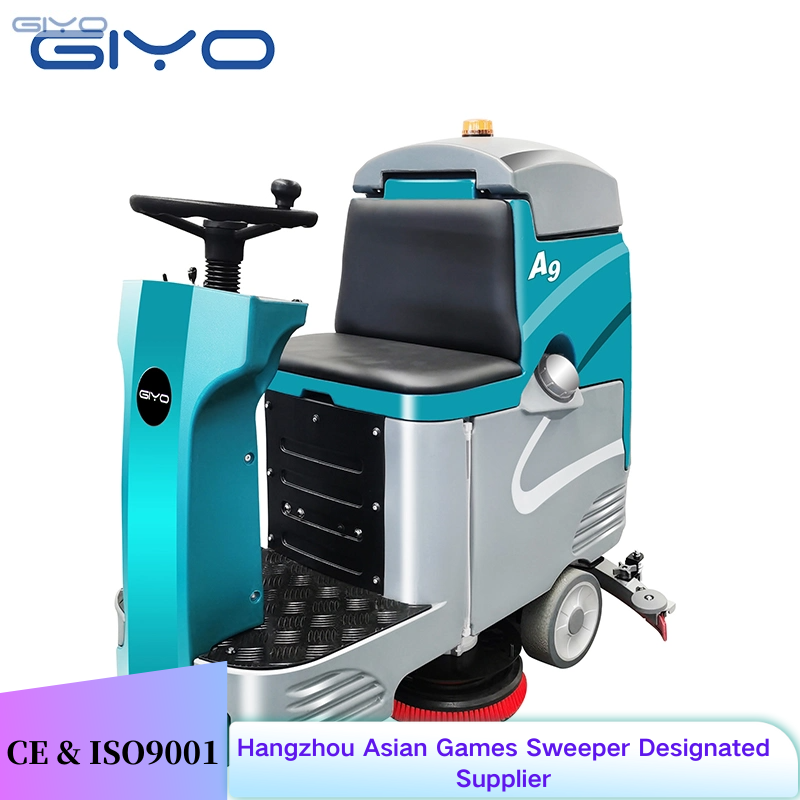
Choosing between a walk-behind unit and a ride-on model fundamentally shifts your operational efficiency. Facility size serves as the most reliable indicator for this equipment decision. A standard rule of thumb suggests upgrading to a riding model when your continuous clearable space exceeds 50,000 square feet.
Wide-open environments maximize the speed and wide cleaning paths of ride-on equipment. Conversely, highly congested areas or narrow-aisle environments often demand walk-behind machines or compact micro-riders. You must evaluate your true clearable footprint rather than total building square footage. Floor plans filled with racking, pallets, or complex machinery can severely limit a large scrubber's maneuverability.
Machine Type | Ideal Environment | Estimated Cleaning Rate (sq. ft./hr) | Operator Effort Level |
|---|---|---|---|
Walk-Behind Scrubber (Small) | Congested aisles, entryways | 10,000 - 15,000 | High |
Walk-Behind Scrubber (Large) | Gymnasiums, medium retail | 20,000 - 30,000 | Moderate |
Micro-Rider Scrubber | Supermarkets, narrow warehouses | 30,000 - 40,000 | Low |
Large Riding Scrubber | Massive logistics centers, manufacturing | 50,000 - 100,000+ | Minimal |
Labor efficiency multipliers heavily favor ride-on units. A robust riding scrubber can clean up to three times faster than a comparable walk-behind machine. This dramatic speed increase allows your facility staff to complete massive floor cleaning routes in a fraction of the time.
Operator fatigue drastically influences long-term productivity. Pushing a heavy walk-behind machine for several hours strains the human body. Ride-on units offer immense ergonomic advantages by allowing the operator to sit comfortably while steering. Preventing worker fatigue during multi-hour cleaning shifts indirectly boosts staff retention. Rested workers maintain better situational awareness, which sharply reduces workplace accident rates.
Procuring the perfect equipment requires matching mechanical specifications to your exact floor conditions. You cannot simply buy the largest machine available. You must carefully align deck configurations, power supplies, and down pressure to your daily debris profile.
The scrub deck represents the heart of any floor cleaning machine. Manufacturers generally offer two distinct brush configurations, each engineered for completely different environments.
Disk Brushes and Pads: These traditional flat pads excel on smooth, even floors like epoxy or polished concrete. Disk decks generate high down-pressure, making them highly effective for removing stubborn scuff marks. However, they require operators to thoroughly sweep the floor before scrubbing.
Cylindrical Brushes: These tube-shaped brushes rotate incredibly fast to sweep and scrub simultaneously. They easily tackle rough surfaces, uneven grout lines, or floors littered with loose debris. A cylindrical deck sweeps small debris into an integrated hopper, entirely eliminating the time-consuming pre-sweeping step.
Selecting the right power source dictates how your facility will manage daily charging schedules and operational shifts.
Traditional AGM and Lead-Acid batteries remain the industry standard. They require strict daily maintenance, including regular water level checks and full charging cycles. Failing to maintain lead-acid batteries severely degrades their lifespan and reduces machine runtime.
Lithium-ion batteries completely eliminate watering requirements. They support "opportunity charging," allowing operators to plug the machine in during quick lunch breaks without damaging the battery chemistry. This keeps the machine running across multiple shifts seamlessly.
Internal combustion or propane engines provide endless runtime as long as fuel remains available. However, they generate exhaust emissions. Facilities must reserve these heavy-duty units exclusively for well-ventilated, ultra-large industrial spaces or outdoor applications.
Tank capacity directly influences productivity. Larger solution and recovery tanks keep the machine on the floor longer. Operators spend less time driving back to the janitorial closet for dump-and-fill cycles. If your building spans vast distances, large tanks are absolutely essential for efficiency.
Variable down-pressure serves as another critical specification. Facilities rarely have uniform soil levels. Entryways might feature heavy mud, while internal aisles only accumulate light dust. A Riding Floor Scrubber equipped with adjustable actuator down-pressure lets operators push brushes harder into the floor strictly when necessary. This preserves brush life while guaranteeing deep cleaning power exactly where heavy grime builds up.
Viewing a floor scrubber merely as a cleaning tool misses the bigger picture. These robust machines function as strategic operational assets. They fundamentally change how maintenance teams tackle their daily facility responsibilities.
Labor reallocation provides immediate operational relief. When a machine cuts a four-hour floor cleaning task down to just one hour, you gain significant workforce flexibility. Facility managers can deploy those freed-up maintenance hours toward higher-value tasks. Staff can focus on preventative building maintenance, deep cleaning touchpoints, or servicing critical infrastructure instead of endlessly walking behind a mop.
Risk mitigation stands out as a crucial advantage for busy environments. Slip-and-fall accidents present massive liability issues for warehouses and retail spaces alike. Traditional mopping leaves floors wet and highly dangerous for extended periods. A ride-on scrubber's powerful squeegee and vacuum system leaves floors instantly dry and safe for immediate foot traffic or forklift operation. This strict adherence to dry-floor standards drastically bolsters your OSHA compliance efforts.
Standardization of cleanliness elevates your facility's professional appearance. Manual cleaning introduces wild variability. One worker might use too much chemical, while another applies too little pressure. Mechanized cleaning removes human inconsistency. Consistent solution metering prevents dangerous chemical residue buildup. Uniform brush pressure guarantees that every square foot of your facility receives the exact same level of thorough cleaning.
Purchasing sophisticated cleaning equipment solves one problem but introduces new operational responsibilities. Realizing the full potential of your equipment depends entirely on your team's commitment to daily care.
The hidden penalties of neglect accumulate rapidly. You must enforce daily maintenance non-negotiables. Operators absolutely must drain and rinse the recovery tanks after every shift. Leaving dirty slurry inside the tank overnight invites severe bio-hazard buildup and foul odors. Workers must also wipe down squeegee blades daily and clear vacuum filters of lint and debris. Skipping these basic steps directly causes poor water pickup and dangerous wet floors.
Operator training requirements cannot be overlooked. Sophisticated equipment demands designated, properly trained operators. You cannot simply hand the keys to an untrained employee. Comprehensive training prevents aggressive machine abuse, such as slamming into racking or driving over pallet fragments. Proper handling protects your facility infrastructure and keeps the equipment functioning perfectly.
Recurring operational requirements dictate your long-term success. You must proactively plan for wear-part replacement cycles. Squeegee blades naturally degrade and require flipping or replacing to maintain suction. Scrub brushes wear down over time and lose their abrasive edge. Furthermore, you must ensure your team uses approved, low-foaming cleaning detergents to prevent vacuum motor flooding. Establishing a strict preventative maintenance service schedule prevents unexpected breakdowns.
Before making a final selection, prioritize your shortlisting next steps. Always request an on-site demonstration to see how the machine handles your specific floors. Audit your physical aisle widths and turning radius constraints to guarantee the machine can navigate tight corners. Finally, evaluate the local service availability of your chosen equipment dealer to ensure you receive rapid support when maintenance needs arise.
Deploying a riding floor scrubber transforms facility maintenance from a grueling manual chore into a streamlined, highly efficient process. These robust machines serve as incredible assets for boosting labor efficiency and dramatically reducing slip-and-fall hazards. However, the investment only makes sense if your clearable floor footprint truly justifies the equipment's scale and operational footprint.
You must carefully match the machine's specific configuration to your unique daily demands. Choosing the correct scrub deck style ensures you handle your specific debris profile properly. Selecting the optimal power source guarantees the machine will easily survive your facility's toughest shifts. Adhering to strict daily maintenance routines remains the absolute key to maximizing performance and equipment longevity.
Take control of your facility's cleanliness today. Contact Performance Systems to schedule an expert facility audit. We will help you evaluate your exact operational requirements and browse our extensive inventory of high-quality refurbished and new floor scrubbers.
A: Industry standards recommend upgrading when your continuous clearable area exceeds 50,000 square feet. However, compact micro-riders often prove highly effective in areas as small as 25,000 square feet if your primary operational goal involves minimizing operator fatigue and maximizing cleaning speed.
A: A single charge typically delivers 3 to 6 hours of continuous runtime, depending on battery chemistry and machine size. Regarding total lifespan, well-maintained lead-acid batteries generally last 3 to 5 years. Lithium-ion batteries can easily last up to 10 years when cared for properly.
A: Yes, but only if equipped with a cylindrical scrub deck. Cylindrical brushes rotate rapidly to throw light debris into an integrated hopper while scrubbing the floor simultaneously. Standard disk scrubbers do not sweep; they require you to thoroughly dust-mop the area beforehand.
A: High-quality industrial scrubbers typically last 7 to 10 years under heavy commercial use. This lifespan depends heavily on your team's strict adherence to preventative maintenance, daily tank cleaning, and timely replacement of wear parts like brushes and squeegees.
