
English
Views: 0 Author: Site Editor Publish Time: 2026-08-21 Origin: Site
Industrial floor cleaning is never just a basic housekeeping task. We must view it as a critical operational mandate. It drives overall facility safety and operational efficiency. Scaling your operations from manual mopping to mechanized scrubbing requires significant capital expenditure. Upgrading your existing fleet also demands careful financial planning. Facility managers face intense pressure to justify these heavy equipment investments. This guide provides procurement teams with an objective framework. You will learn how to evaluate crucial equipment specifications accurately. We will help you determine exactly when purchasing a high-capacity Ride-On Floor Scrubber becomes the most responsible financial decision. Read on to master equipment sizing, brush selection, and implementation logic. You can transform your maintenance program into a highly efficient daily operation.
Sizing is Critical: Selecting a machine based purely on price often results in mismatched capacity; facilities over 50,000 sq. ft. generally require a ride-on floor scrubber to achieve positive ROI on labor savings.
Brush Selection Dictates Outcome: Disk brushes are optimal for smooth, flat surfaces, while cylindrical brushes consolidate sweeping and scrubbing for textured or debris-heavy floors.
Power Source Impacts OpEx: The choice between lead-acid, lithium-ion, and internal combustion (propane/diesel) directly influences daily maintenance requirements, indoor air quality compliance, and long-term operating costs.
Hidden Costs: Total Cost of Ownership (TCO) must account for consumable wear (squeegees, brushes), operator training time, and routine battery maintenance.
Manual mopping is remarkably inefficient for large industrial spaces. A single worker might clean 2,000 square feet per hour manually. Mechanized scrubbers routinely exceed 20,000 square feet per hour. Labor accounts for roughly 80 to 90 percent of total cleaning costs. Machine efficiency acts as a direct driver of your return on investment. You must allocate your workforce effectively to remain profitable.
Mechanized systems enforce strict sanitation standardization. Automated chemical dosing eliminates wasteful human error. Workers no longer guess the correct detergent ratios. Consistent down-pressure ensures uniform sanitation across your entire facility. We remove the variability of manual scrubbing. This standardization protects your floor finish and prevents costly damage.
We must also consider severe risk mitigation. Slips and falls frequently trigger OSHA-recordable incidents. Manual mopping leaves floors wet and highly dangerous. Mechanized scrubbers utilize advanced vacuum and squeegee systems. They recover water immediately during operation. They leave floors perfectly dry and safe for immediate foot traffic.
Consider these core operational benefits when upgrading:
Labor Reallocation: You can move staff to higher-value maintenance tasks.
Chemical Efficiency: Automated dosing reduces wasted detergent and cuts supply costs.
Floor Preservation: Regulated pressure extends the life of concrete or epoxy surfaces.
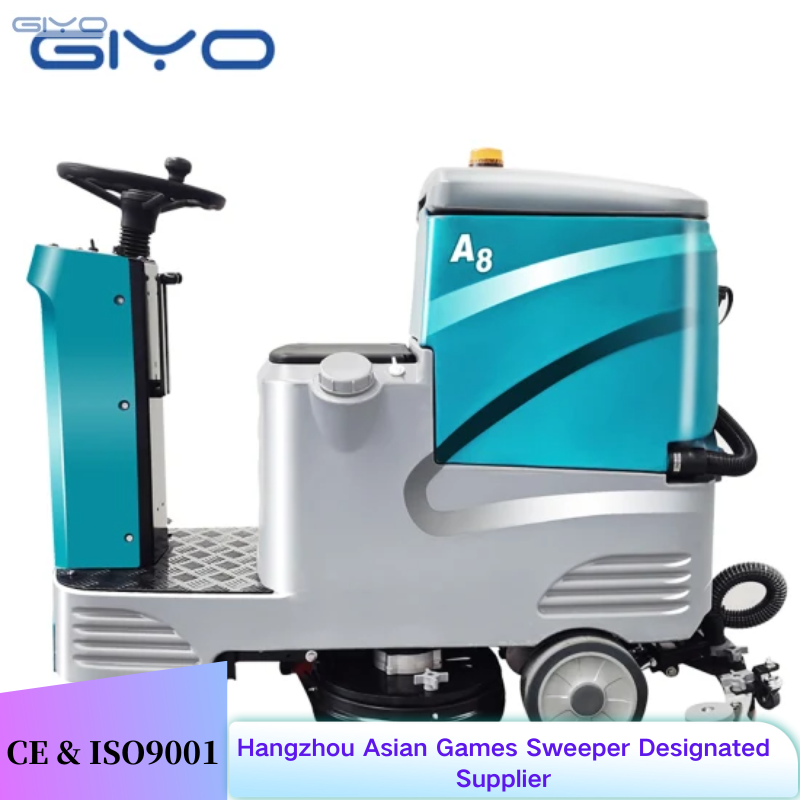
Buyers must define clear baseline metrics before purchasing any equipment. Walk-behind scrubbers typically suit facilities between 10,000 and 50,000 square feet. Warehouses, large retail stores, and distribution centers require significantly more power. We introduce the ride-on model as the standard for 50,000+ square foot environments. Attempting to clean massive spaces using small machines wastes valuable labor hours.
You must carefully balance maneuverability against pure cleaning output. Walk-behinds feature tight turning radii. They navigate congested grocery aisles perfectly. Ride-on units deliver high-speed, wide-path clearing capabilities. They dominate open warehouse floors and long corridors. You should map your facility layout before choosing a specific design.
Assess the human element carefully during your evaluation. Manual pushing causes intense operator fatigue over an eight-hour shift. Fatigued workers naturally slow down, causing steep productivity drop-offs. Ride-on models easily sustain continuous cleaning speeds around three to four miles per hour. Operators remain seated comfortably. They maintain peak efficiency from the beginning of their shift until the end.
Watch out for these signs indicating you need a larger machine:
Operators frequently complain about physical exhaustion after completing their routes.
Floor cleaning tasks consistently spill over into overtime hours.
Your current machine requires constant battery recharges to finish one complete pass.
Facility expansions have increased your cleanable square footage significantly.
Your evaluation must examine cleaning path width and tank capacity. A 40-inch cleaning path drastically outperforms a 26-inch path. Larger solution and recovery tanks reduce mandatory downtime. Operators spend less time dumping dirty water and refilling clean solution. You maximize actual scrubbing minutes per shift. Look for tanks exceeding 30 gallons for heavy industrial use.
Next, evaluate your brush head technology options. Disk brushes work best for smooth concrete, vinyl composition tile, or terrazzo. They apply high down-pressure to remove stubborn stains effectively. Cylindrical brushes excel on uneven surfaces and grouted tile. They easily handle light pallet debris and small fasteners. Cylindrical systems often eliminate the need for manual pre-sweeping.
Brush Technology Application Guide
Brush Type | Ideal Surface | Primary Benefit | Debris Handling |
|---|---|---|---|
Disk Brush | Smooth concrete, VCT, Terrazzo | High down-pressure for deep stains | Poor (requires sweeping first) |
Cylindrical Brush | Grouted tile, rough concrete | Sweeps and scrubs simultaneously | Excellent for light debris |
Orbital Pad | Finished floors, gymnasiums | Chemical-free finish removal | None (dust only) |
Power systems present another critical daily choice. Traditional wet lead-acid batteries offer lower upfront costs. However, they carry high maintenance risks and require daily watering. Lithium-ion batteries demand higher initial capital expenditure. They provide zero daily maintenance and allow convenient opportunity charging. Liquid propane or diesel engines suit heavy-duty, well-ventilated industrial applications. Choosing the correct power source for your new Ride-On Floor Scrubber guarantees maximum daily uptime.
Buyers often overlook hidden layout constraints. You should carefully measure your narrowest aisles and standard doorway widths. Check your elevator weight capacities before shortlisting heavy equipment. A machine might look perfect on paper but fail to clear a crucial warehouse doorway. Measure the turnaround space at the end of your storage aisles.
Ramp gradients present a very common implementation failure. Many managers assume scrubbers easily operate on steep warehouse inclines. You must check the machine's maximum climbing angle. Industry professionals call this metric gradeability. Test this specification while the machine holds a full tank. Water weight drastically alters traction and climbing performance on concrete ramps.
Set realistic expectations regarding daily consumable degradation. Squeegee blades require daily wiping and frequent rotation. Operators must clear vacuum filters regularly to maintain suction power. Strict battery charging protocols prevent premature equipment failure. Neglecting these basic tasks destroys your machine components rapidly. Establish clear daily maintenance checklists for all operators.
Common mistakes to avoid during implementation:
Failing to order replacement squeegees ahead of time.
Allowing untrained staff to operate heavy equipment without certification.
Using overly aggressive chemicals on sealed floors.
Ignoring warning lights regarding battery water levels.
Provide a clear framework for calculating lifecycle costs over five years. Add the upfront machine cost to your expected daily consumables. Include your preventative maintenance plan and required operator labor hours. A cheaper machine often costs significantly more over five years. Inferior components break frequently and disrupt your daily cleaning schedules.
Evaluate the vendor service ecosystem carefully. An industrial machine is only as valuable as its guaranteed uptime. Evaluate vendors based on their local technician availability. Check their regional parts warehousing capacity. Review their service level agreement response times. You need guaranteed support within twenty-four hours of a breakdown.
We strongly advise buyers never to purchase industrial cleaning equipment unseen. Always demand an on-site vendor demonstration. Test the equipment on your facility's worst stubborn stains. Navigate your tightest corners to ensure proper fit. Assess overall ease of use for your dedicated floor staff. Operator buy-in dictates the long-term success of your cleaning program.
Follow this evaluation sequence during a vendor visit:
Review the control panel for intuitive operation and simple training.
Inspect the squeegee assembly for easy, tool-free blade replacements.
Test the emergency stop features and safety braking systems.
Drive the machine over your steepest internal ramps fully loaded.
Transitioning to mechanized scrubbing elevates your facility safety standards immediately. It removes excess moisture from floors and prevents expensive liability claims. Selecting the right equipment size prevents wasteful capital expenditure and maximizes operator efficiency. Proper brush and battery configurations ensure long-term operational success for your specific environment.
We strongly encourage decision-makers to audit their current floor plans immediately. Calculate your current daily manual cleaning hours to identify wasted labor. Schedule a consultative site survey with an authorized equipment dealer today. Request a demonstration to test a high-capacity machine in your actual working environment.
A: Industrial floor scrubbers generally last between five and seven years under commercial daily use. They can often operate up to ten years if you implement rigorous preventative maintenance. You must replace batteries regularly and service motors promptly to achieve this extended lifespan.
A: Yes, it absolutely can. You must equip it with a cylindrical brush deck and a debris catch tray. This setup handles light pallet debris easily. However, heavy debris or large industrial waste still requires a dedicated industrial sweeper beforehand.
A: Leasing preserves your immediate cash flow and often includes helpful preventative maintenance tiers. Buying the equipment outright proves better for long-term financial returns. Purchasing makes sense if your facility already employs trained in-house mechanics to handle routine repairs.
A: They clean almost all commercial hard floors effectively. This includes sealed concrete, epoxy coatings, vinyl composition tile, terrazzo, and rubber flooring. You simply need to apply the correct combination of brush aggression and proper chemical pH for each specific surface.
