
English
Views: 0 Author: Site Editor Publish Time: 2026-09-02 Origin: Site
Facility managers face a constant battle today. They must uphold strict hygiene and safety standards. At the same time, they struggle against rising labor costs. Relying on manual mops or walk-behind units often yields diminishing returns. This operational drag happens quickly. It becomes obvious as facilities scale past medium-capacity footprints. Operators grow tired pushing heavy machines. Cleaning times stretch far beyond scheduled shifts. Consequently, maintenance budgets drain rapidly. You need a better approach to manage large floors efficiently. This guide helps you objectively evaluate your cleaning strategy. We will explore whether a Riding Floor Scrubber aligns with your facility's specific square footage. We also examine facility layout constraints. You will learn how to improve labor reallocation. We outline methods to enhance workplace safety. Ultimately, this article provides a framework for analyzing equipment ROI without getting bogged down by hidden expenses.
Labor Reallocation: Shifting from walk-behind to ride-on equipment can reduce floor cleaning times by up to 50-60%, allowing staff to focus on higher-value maintenance tasks.
Square Footage Thresholds: The investment is typically justified for unobstructed spaces exceeding 40,000–50,000 square feet.
Safety & Compliance: High-capacity recovery tanks and consistent squeegee pressure leave floors instantly dry, significantly reducing slip-and-fall liabilities.
TCO Realities: Upfront capital expenditure must be weighed against battery lifespan, consumable wear, and required operator training.
Most managers assume equipment consumes their cleaning budget. They are completely wrong. Labor hours represent the primary expense in facility maintenance. Labor tied directly to floor cleaning accounts for 80-90% of these costs. When you pay a worker to push a slow machine, you waste valuable budget. Consider the math over a calendar year. An employee spending four hours daily on floors costs thousands. Cutting that time in half frees up massive capital. You can reallocate those hours to detail work. Dusting, sanitizing touchpoints, and equipment repair take priority.
Inconsistent cleaning results also plague large facilities. Walk-behind units demand continuous physical effort. Operators experience severe fatigue as their shift progresses. This physical toll leads to uneven brush pressure. Tired workers walk slower and steer loosely. They inevitably miss zones toward the end of a long shift. Corners get ignored. Aisles receive overlapping passes or no passes at all. You end up paying full price for substandard hygiene. The building simply does not look clean.
Furthermore, inefficient equipment introduces severe liability risks. Prolonged wet floor times endanger everyone inside the building. Walk-behind units often leave trails of water on turns. High-traffic environments demand fast drying times to prevent accidents. Slip-and-fall incidents trigger massive insurance claims. They damage your brand reputation instantly. Consider these critical environments where dry floors matter most:
Retail Spaces: Shoppers navigate aisles constantly looking at shelves. They rarely look at the floor. Wet floors invite expensive slip-and-fall lawsuits.
24/7 Warehouses: Forklifts require completely dry concrete to brake safely. Slippery surfaces cause dangerous inventory collisions and worker injuries.
Healthcare Facilities: Patients and staff need absolute safety. Moisture breeds harmful bacteria. It also drastically increases mobility injury risks.
A Riding Floor Scrubber dramatically changes your operational math. It offers exponential coverage compared to commercial walk-behind models. Walk-behind units typically clean 15,000 to 20,000 square feet per hour. They limit how much one person can accomplish. Ride-on machines easily cover 30,000 to 50,000 square feet hourly. They feature much wider cleaning paths. These paths typically range from 26 to over 40 inches. This massive width drastically reduces operational downtime. Your staff finishes the floor much faster. The facility returns to normal operation sooner. Speed matters when cleaning aisles during open business hours.
Pushing heavy equipment over massive expanses takes a severe physical toll. Workers suffer from chronic back pain. Foot fatigue ruins their productivity. Ride-on equipment functions as an essential tool for improving worker safety. The operator sits comfortably while steering. This ergonomic setup reduces fatigue-related errors. It keeps your staff alert during late-night shifts. Valuing employee comfort can potentially lower turnover in demanding janitorial roles. You retain experienced staff longer. Lower turnover means less money spent on recruiting and training new hires.
Ride-on machines weigh significantly more than manual units. This heavy weight translates directly to consistent downward brush pressure. It forces bristles deep into porous surfaces. Heavy machines also create tighter squeegee seals against the floor. They suck up dirty water instantly. Instant-dry floors provide tremendous hygiene benefits. Environments requiring strict sanitation compliance rely on this feature. Food and beverage processing plants cannot tolerate standing water. Pooling water invites mold and regulatory fines. A ride-on machine eliminates this moisture threat entirely.
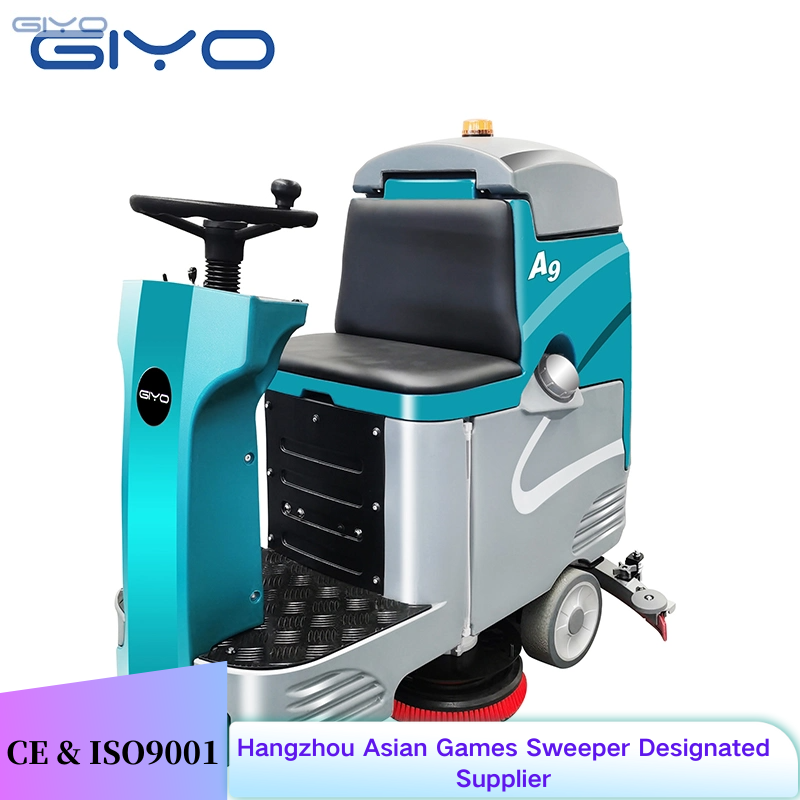
You need clear criteria to choose the right machine. Facility layout dictates your equipment strategy. Do not guess what size you need. Evaluate your building metrics carefully.
The 40,000 Sq. Ft. Rule
Industry standards rely on a specific baseline facility size. We call this the 40,000 square foot rule. When your cleanable space exceeds 40,000 to 50,000 square feet, the financial return shifts. A ride-on unit easily overtakes a walk-behind model in labor savings at this threshold. Below this size, the machine cannot reach its top speed. Above this size, walk-behind machines waste too many labor hours.
Aisle Width and Maneuverability
You must assess your exact facility layout. Tight racking systems present unique operational challenges. Heavy foot traffic requires nimble equipment. Full-size industrial riders might not fit everywhere. In these cases, you may necessitate a micro-rider. Micro-riders fit seamlessly through standard commercial doorways. They turn tightly in narrow aisles. Sometimes a hybrid fleet offers the best solution. You might use a large rider for the main lobby and a micro-rider for stockrooms.
Elevators and Ramps
Multi-story facilities add logistical constraints. You must evaluate floor load capacities. Water-filled machines weigh heavily. A fully loaded rider can weigh over a thousand pounds. Ensure your freight elevators can handle this concentrated load safely. Also, check the incline ratings on your ramps. Not all heavy machines can safely navigate steep inclines. Traction becomes an issue on wet ramps.
Financial Breakeven Analysis
You must calculate your financial breakeven point accurately. Determine your current monthly labor cost for floor care. Compare it to the monthly lease cost of new equipment. Factor in the time saved. When monthly labor savings surpass the monthly equipment payment, you reach breakeven. This clear calculation proves the investment's worth to cautious stakeholders.
Equipment Comparison Matrix
Feature | Commercial Walk-Behind | Standard Ride-On Scrubber |
|---|---|---|
Average Hourly Coverage | 15,000 - 20,000 sq. ft. | 30,000 - 50,000+ sq. ft. |
Typical Cleaning Path | 17 to 26 inches | 26 to 40+ inches |
Operator Fatigue Level | High (pushing required) | Low (seated operation) |
Ideal Cleanable Area | Under 40,000 sq. ft. | Over 40,000 sq. ft. |
Matching hardware to your business goals guarantees success. Do not buy premium features you do not need. Focus on specifications driving actual productivity.
Power sources dictate your cleaning schedule. Lead-Acid or AGM batteries cost less upfront. They work perfectly for single-shift facilities. However, they require careful watering and maintenance. Lithium-ion power sources cost more initially. They charge faster and last much longer. You must map your battery choice to your operational reality. A 24/7 operation requires opportunity charging. You charge the machine during short lunch breaks. Lithium-ion handles this mid-shift charging perfectly. Lead-acid batteries degrade quickly if you opportunity charge them.
Analyze the solution and recovery tank sizes closely. Small tanks ruin cleaning productivity. Operators waste precious time driving to the maintenance closet. They spend more time dumping water than scrubbing floors. Larger tanks mean fewer trips to the slop sink. They maximize active cleaning time. A 30-gallon tank keeps your operator scrubbing significantly longer than a 15-gallon tank. Always buy the largest tank capacity your aisle width allows.
Modern IoT capabilities transform equipment management. Telemetry systems track machine location in real time. They record operator usage logs accurately. You know exactly who used the machine last. You receive instant collision reports if an accident occurs. Preventative maintenance alerts protect your capital investment. You fix small issues before they become expensive breakdowns. This software provides total visibility into your cleaning program.
Buying the machine only solves half the problem. You must implement it correctly. Failing to prepare your facility leads to broken equipment and frustrated staff.
Operator Training Requirements
Riding scrubbers qualify as heavy machinery. You cannot simply hand over the keys. They require formalized training to prevent facility damage. Untrained operators can destroy pallet racks. They can damage expensive inventory or injure pedestrians. Proper instruction ensures safety for everyone in the building. Implement a certification process for all designated operators.
Infrastructure Needs
Your building needs specific infrastructure for these machines. You need dedicated charging stations. These stations must be well-ventilated. Traditional lead-acid batteries release gases during charging. Safety regulations often require eye wash stations nearby. Accessibility matters greatly. Create clear dump and refill zones. Floor drains and water hoses must remain easy to reach.
Preventative Maintenance Demands
You must transparently outline replacement costs. Wear parts break down over time. You must maintain peak performance daily. Missing routine maintenance shortens machine life drastically. Train your team to handle these core responsibilities:
Squeegee Blades: Flip or replace them immediately when streaks appear on the floor.
Scrub Brushes and Pads: Inspect them daily for uneven wear and entangled debris.
Vacuum Motors: Clean the debris catch regularly to prevent fatal motor burnout.
Tank Filters: Rinse them after every single shift to maintain strong water flow.
You have the data. Now you must take decisive action. Prepare your facility for an equipment upgrade.
Conducting a Site Audit
Start by measuring your actual cleanable square footage. Do not use your total building footprint. Exclude fixed obstacles like heavy machinery. Subtract permanent shelving and office blocks. This exact cleanable number dictates the machine size you truly need. A 100,000 square foot warehouse might only have 40,000 square feet of cleanable aisles.
Scheduling a Site Demonstration
Never buy a machine without seeing it work. Advise your vendor to bring the specific model to your building. Test it on your facility's most difficult floor surface. Run the demonstration during peak operational hours. You need to see how it maneuvers around real-world traffic. Listen to the noise levels. Check the turning radius in your tightest corner.
Reviewing Service Level Agreements (SLAs)
Machines break down eventually. You need strong local dealer support. Review the vendor's service level agreements carefully. Ensure local parts availability before signing anything. Demand guaranteed repair response times. Your cleaning program halts completely if you wait three weeks for a replacement vacuum motor.
Upgrading to a ride-on unit represents a major operational shift. It acts as a serious investment in labor efficiency and risk mitigation. You are not just making a basic hardware purchase. You are buying time, safety, and exceptionally cleaner floors. We reiterate the importance of matching the machine's specifications precisely to your needs. The battery type, tank size, and brush style must align perfectly with your facility's unique operational rhythm. Do not settle for a generic setup. Evaluate your specific layout constraints honestly. Take the next logical step today. Request a custom ROI calculation from your equipment vendor. Schedule an on-site equipment demonstration to see the efficiency firsthand. Empower your maintenance team with the right tools for the job.
A: The investment typically becomes cost-effective when your cleanable space exceeds 40,000 to 50,000 square feet. At this threshold, the labor savings from faster cleaning speeds offset the equipment costs. However, highly congested areas with narrow aisles might still require smaller equipment regardless of total square footage.
A: Yes. Manufacturers design specific models called "micro-riders" for this exact purpose. They offer the seating and speed of a rider but feature a compact chassis. These micro-riders easily pass through standard commercial doorways and maneuver safely through tight warehouse racking systems.
A: You can expect realistic run times ranging from 3 to 6 hours on a single charge. The exact duration depends heavily on your setup. Battery type, floor friction, and downward brush pressure settings all impact battery life. Lithium-ion systems generally provide longer sustained power.
A: Daily maintenance prevents costly repairs. You must drain and rinse the recovery tanks after every shift. Always wipe down the squeegees to remove damaging grit. Leave the tank lids open overnight to prevent mold growth. Finally, follow proper charging protocols to maximize your battery's lifespan.
